The benefits of sales enablement are measurable, and the research is consistent: reps ramp faster, sell more of their week, deliver one compliant message, win more conversations, and close larger deals, while marketing finally learns which content earns its keep. This page walks through all seven benefits with the evidence behind each, and what changes when your reps sell in hospitals instead of offices.
New to the term? Start with what sales enablement is, then come back for the case. Every benefit below appears repeatedly across the enablement research; the key studies are collected in our sales enablement statistics roundup. Here is each one, what the numbers say, and where it shows up in practice.
| Benefit | What the research says | Where you see it |
|---|---|---|
| 1. Shorter ramp time | Structured onboarding paths replace shadowing; new reps learn product, message, and objections in one sequence. | Time to first deal for each new hiring class. |
| 2. More selling time | Reps spend only ~37% of their time on revenue-generating work, and up to 440 hours a year hunting for content. | Hours recovered per rep, per week, from week one. |
| 3. One compliant message | 90% of B2B sellers ignore sales material that is outdated or irrelevant; a governed library retires old versions everywhere at once. | Zero off-message decks in the field; compliance audits that pass. |
| 4. Higher win rates | Aligned sales and marketing teams close marketing-generated leads 67% more often. | Conversion rate on the conversations you already have. |
| 5. Bigger deals | Best-in-class enablement lifts annual contract value roughly 14%. | Average deal size, quarter over quarter. |
| 6. Content that gets used | About 65% of marketing content goes unused, roughly $2.3M a year in enterprise opportunity cost. | Usage analytics per asset; budget shifted to what the field opens. |
| 7. Decisions on data | Engagement tracking replaces anecdote: who opened what, for how long, and what happened next. | Pipeline reviews grounded in buyer behavior, not rep memory. |
Six of the seven benefits accrue to the field. The seventh is the one that sustains the budget: for the first time, marketing and sales leadership see the same numbers.
Content usage by asset, buyer engagement per share, training completion, rep activity by account. If a benefit is real, it shows up here; if a metric can’t change a decision about content, coaching, or hiring, drop it. That discipline is what separates enablement programs that survive budget season from those that don’t.
Reporting and CRM integrations →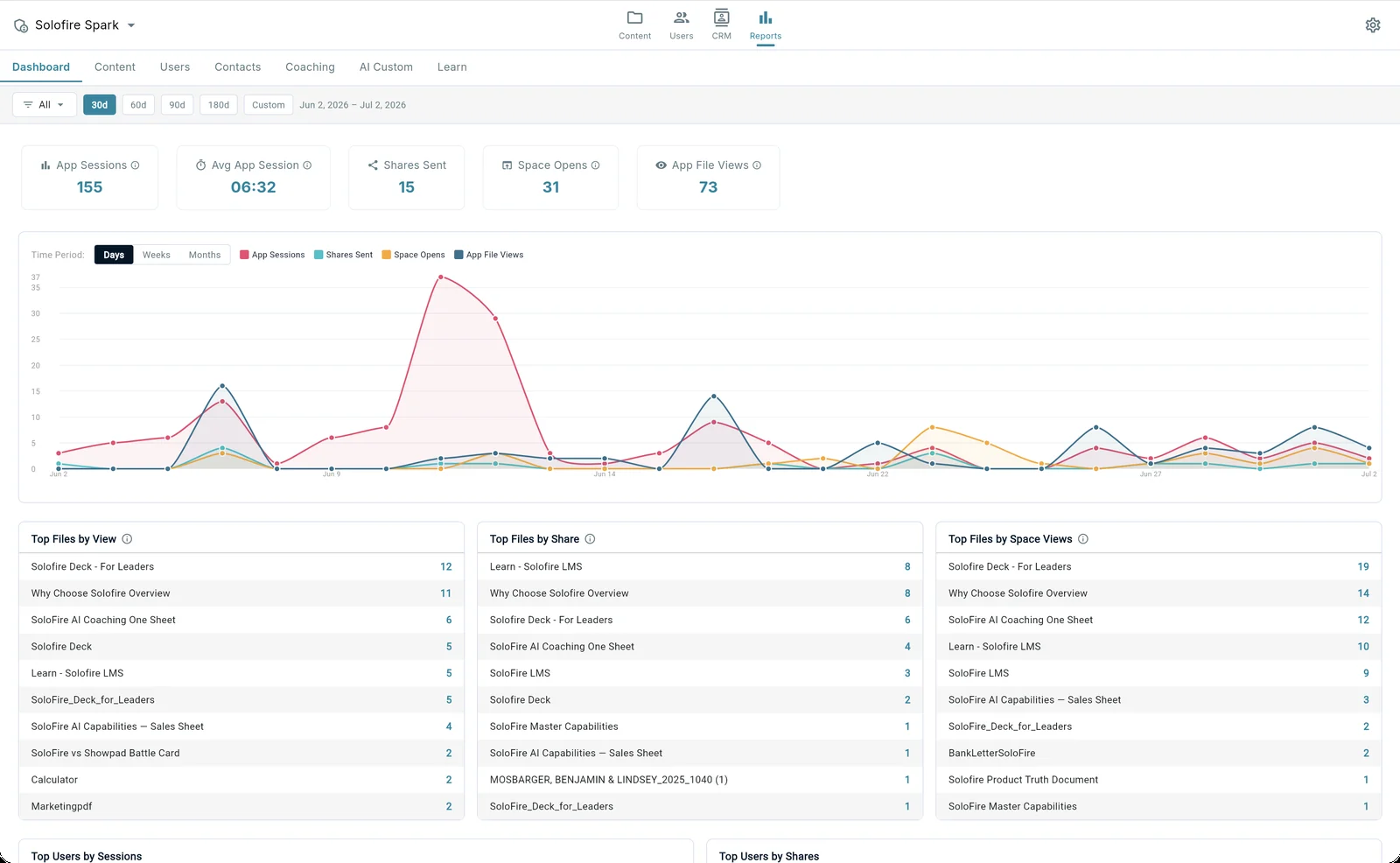
Hospitals, ORs, and labs block outside devices. An offline-first library turns dead zones into selling time; benefit #2 doubles when connectivity is the constraint.
In medtech, an outdated claim in the field is a compliance event. Forced retirement of old versions makes benefit #3 an audit trail, not a hope.
Generic B2B research understates the case for medtech. The harder the selling environment, the more each benefit is worth.
See how the benefits play out in medical device sales enablement and life sciences sales enablement, and how distributor enablement extends every one of them to independent reps who sit outside your CRM and would otherwise see none of these gains.
See How SoloFire Does ItDistributor reps get the same current, branded content as your direct team, without CRM seats. The benefits reach your whole field force, not just your payroll.
SoloFire deploys in days, publishes its pricing ($30/user/month, everything included), and starts producing usage data with the first rollout. Compare platforms on the comparison hub.
The practice delivers the seven benefits above. The software is what makes them repeatable across a whole field team instead of depending on one good manager. The benefits of sales enablement software are specific and easy to check in a demo.
One approved version of every asset for every rep, retired everywhere at once. Content that opens with no signal in a hospital or lab. Engagement data on every share, so follow-up is based on what the buyer actually read. Onboarding, certification, and coaching inside the same app reps already use. CRM sync that records activity without reps typing it in. Those five are the benefits of sales enablement software itself, and together they are what turn the research findings above into results you can report each quarter.
Everything the platform includes →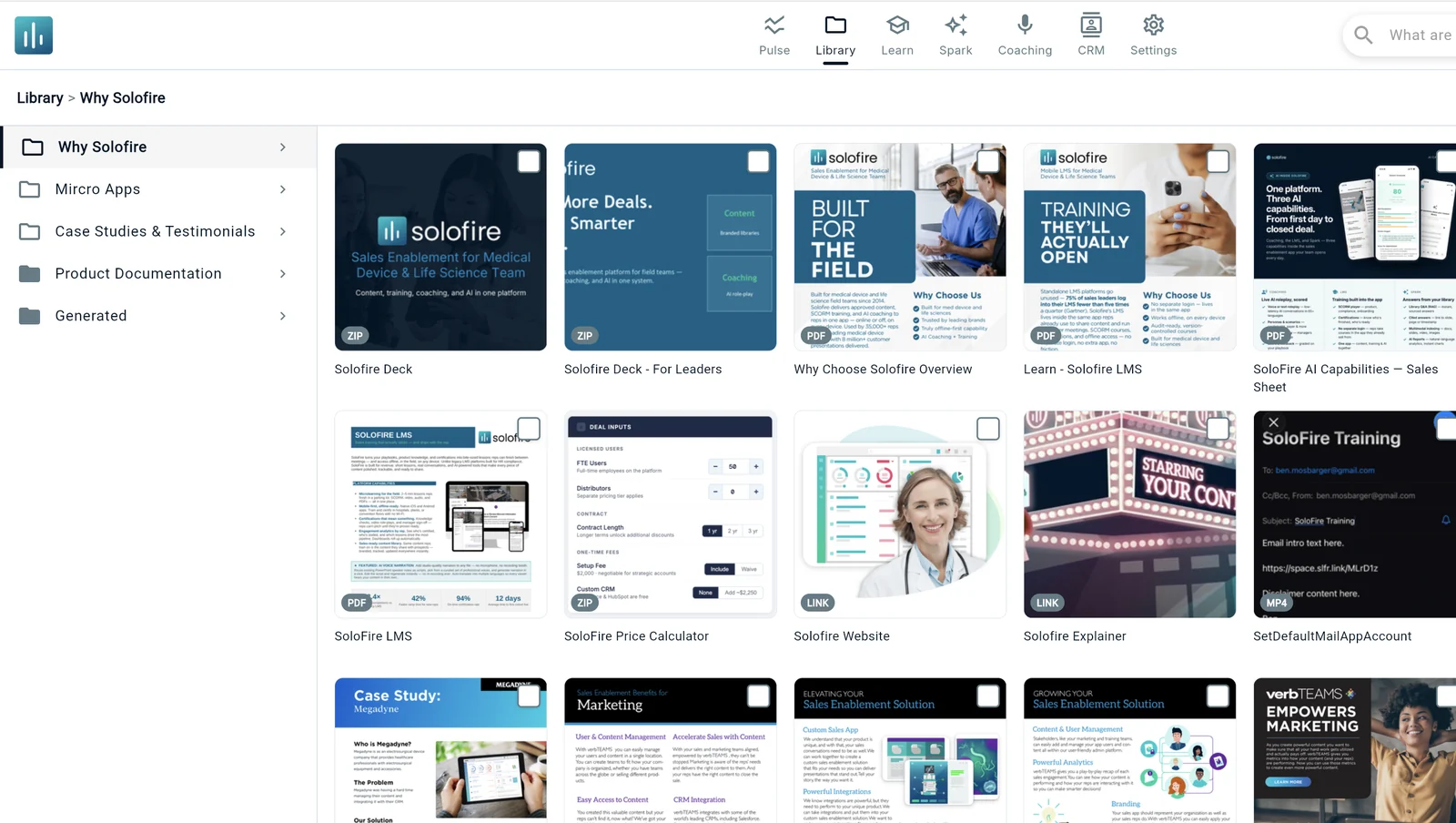
What leaders ask when they’re building the internal case for sales enablement.